Audience Interaction
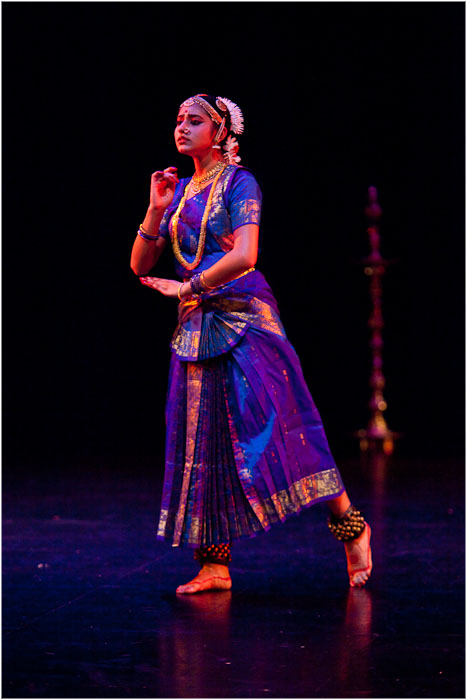
The story narrated in the dance you previously viewed, it is one that is commonly known by Hindus and believers in Krishna. When he is a young boy he is known to steal the butter in the pots and claim that he did not do it. While this particular dance was taking place, the audience members were making connections between what was viewed and specific instances in the story that corresponded with the actions. Connections within the Limbic System (emotion and memory) were being formed between past long term memories or relations of the story and what was visually being displayed and emotions that they felt as well. Audience members made connections such as "oh that is where 'baby Krishna' is looking for the butter but he does not find any", "there he is trying to reach the pot of butter but he can not so he's becoming angry" or "there is his mother churning the butter the old way".
After the performance, I was told that I made the audience cry when i depicted a certain scene. I have always been told during my training that you must portray the emotion in such a way that it reaches the audience and makes them feel the story as they sit in their seats and watch you depict it in front of them. A cousin came up to me after the performance and told me that he felt everything I was when I was sad he to was sad or if I was happy, angry and so forth he also felt those emotions within him when he was watching the performance.
As the dancer evokes specific emotion, when the audience watches the dancer on the stage, especially when depicting a spiritual story such as baby Krishna, they feel a number of different emotions such as if they were actually there during that period in time watching that event or story take place.
From my Grandmother's experience: She was thinking bout the story she knew about Krishna stealing the butter and lying to his mother that he did not steal the butter. She also said that she felt many different emotions including: crying, feeling good, and feeling happy.
From my perspective when I watch the video, i can feel the emotions again as I watch my emotions depicted during the performance. When I was angry in the video, my face would have somewhat of the same expression on it while watching it. Then after that emotion changed in the video, I realized what my face was doing. I found that to be quite interesting how while watching a portrayal of emotion without the use of words spoken by the actor, you still feel that emotion pretty deep.
© 2009 - Niagara College: Psychology 1100 Porfolio Assignment
Sangeeta Bahadur
